The Ultimate Temple of Poseidon Guide: Best Sunset Day Trip from Athens
- Your 2026 "Main Character" guide to Cape Sounion and the Temple of Poseidon.
- Comprehensive transport breakdown: From luxury car rentals to budget KTEL buses.
- 2026 Pricing & Hours: Summer vs. Winter rates and EU youth discounts.
- The Ultimate Free Entry Calendar: How to see Greece's top monuments for $0.
- Deep Dive Myths: The tragic story of King Aegeus and the naming of the Aegean Sea.
- Pro Photography Tips: Mastering the Golden Hour and the post-sunset "Blue Hour."
If you ask any local in Athens where to find the most "main character" moment in all of Greece, they won't point you toward the crowded streets of Plaka or even the Parthenon. Instead, they’ll tell you to head south.
Cape Sounion (often called Sounio) is the place where mainland Greece finally runs out of earth and surrenders to the sea. Perched on a jagged cliff 200 feet above the crashing waves of the Aegean, the Temple of Poseidon stands as a magnificent sentinel of white marble. It’s majestic, it’s moody, and let’s be real - it is arguably the most Instagrammable spot in the entire Mediterranean.
Is it worth the trip? Absolutely. While the Acropolis is the intellectual heart of Athens, Sounion is its wild, romantic soul. Whether you’re a history buff chasing the footsteps of Homer or a traveler just looking for that "perfect sunset" you’ve seen on every travel poster, this is the one day trip from Athens you cannot afford to skip. In this guide, I’m breaking down everything you need to know for your 2026 visit: from dodging the tourist crowds and finding Lord Byron’s secret signature, to navigating the Athens Riviera like a pro.
For most travelers, this 45-mile trek south along the Athens Riviera becomes the "core memory" of their Mediterranean vacation. It is here that the gleaming white marble of the gods meets the sea in a panorama that looks more like a high-budget Hollywood set than a historical site.
The Legend of the Aegean Sea: Mythology Meets History
Sounion is not just about the views; it is a "sacred" place (Hieron) that has captivated minds since Homer described it in the Odyssey as the "Sacred Cape." Here, the lines between epic poetry and archaeological fact blur.
Aegeus and Theseus: The Original Tragic Mistake
Ever wonder how the Aegean Sea got its name? According to Greek mythology, King Aegeus sat on these very cliffs, scanning the horizon for his son Theseus, who was returning from Crete after defeating the Minotaur. They had a simple deal: white sails for victory, black for death. Theseus won, but forgot to swap the sails. Desperate, Aegeus saw the black sails and leapt into the sea. This myth anchors Sounion as a key strategic observation point in the ancient world.
Apollo and the Fate of Phrontis
The cape also marks the spot where King Menelaus had to pause his fleet returning from Troy. His legendary helmsman, Phrontis, was struck down by Apollo right here. Interestingly, archaeologists have found a peribolos (stone circle) nearby, which many believe is the actual hero-shrine mentioned in ancient texts.
Architecture of Power: How the Temple of Poseidon Was Built
Constructed in the 5th century BC during the Golden Age of Athens, this temple was a masterclass in ancient "branding." It was designed to be a "lighthouse" for sailors returning to the home port.
- Optical Hacks: Instead of the usual 20 flutes (grooves) on the columns, architects used only 16. This made the columns appear more massive from the sea and helped the marble resist salt-air erosion.
- The Marble Secret: The stone from the local Agrileza quarries contains almost no iron, meaning the columns don't yellow over time. They remain a brilliant, noble white that pops against the blue Aegean sky.
Pro-Tip: Finding Lord Byron’s Signature
In 1810, the famous English poet Lord Byron was so moved by the site that he carved his name into one of the columns. While we call it vandalism today, for the Romantics, it was a tribute. You can still spot this famous historical "tag" today—just look for the fenced-off sections.
The Most Famous Sunset in Mainland Greece
Sounion is legendary for its sunset. As the sun dips behind the islands of the Saronic Gulf, the temple columns glow golden-orange. Insider Tip: Stay for the "Blue Hour." About 15–20 minutes after the sun disappears, the sky turns a deep indigo, and the crowds head for the buses, leaving you with a moment of pure, silent contemplation.
How to Get to Cape Sounion from Athens
Located about 70km (43 miles) from the city center, you have several options for your trip:
- Rental Car (Recommended): Drive the scenic coastal road through Glyfada and Vouliagmeni. It’s a beautiful drive with plenty of coves for a quick swim.
- KTEL Bus: The "orange buses" depart from near Syntagma Square. It’s a 2-hour ride but very budget-friendly (around $7).
- Private Transfer/Taxi: Expect to pay around 80–90 euros one way. Great for groups wanting maximum comfort.
Opening Hours & Ticket Prices (2025/2026)
At Sounion, time is measured by the sun. Opening hours are consistent, but closing times change daily based on the sunset.
| Category | Details |
|---|---|
| Opening Time | 9:30 AM (Daily) |
| Closing Time | Sunset (Last entry 20 min before) |
| Ticket | 10 -20 € |
|
|
|
Free Entry Days in 2026
Plan your visit on these dates to enter for free: March 6, April 18, May 18, October 28, the last weekend of September, and the first Sunday of the month during winter (Nov-March).
FAQ: Everything You Need to Know
1. How much time do I need at Cape Sounion?
Expect to spend 1 to 1.5 hours at the archaeological site. Including travel from Athens, the whole experience takes about 5 hours.
2. Is there food available at the Temple?
There is a cafe-restaurant at the entrance with a stunning view, though prices are a bit higher. For a local experience, try the fish tavernas at the beach below the cliff.
3. Can I visit other sites nearby?
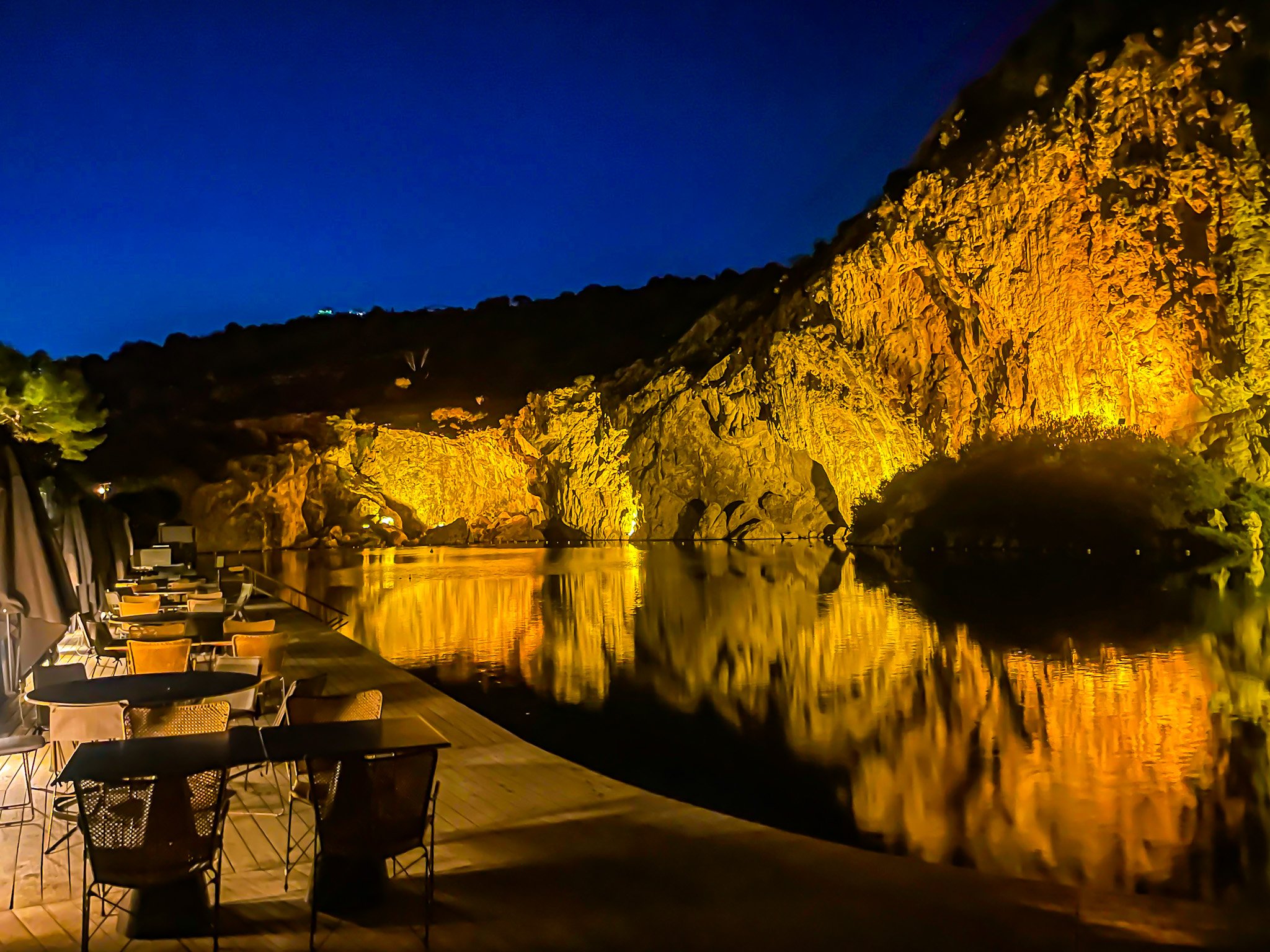
Absolutely. Combine your trip with a stop at Lake Vouliagmeni, a natural thermal spa, or explore the ancient silver mines in the Sounio National Park.