Best Greek Drinks and Alcoholic Beverages: What to Try When Visiting Greece
Exploring Greek cuisine is not only a journey through flavors, but also a window into the culture and traditions of this beautiful Mediterranean country. One of the essential parts of Greek gastronomy are the potá - the drinks that for centuries have accompanied meals, festivities and long evenings spent with family and friends. Greece’s rich selection of alcohols, ranging from strong distilled spirits to delicate aromatic wines, reflects both the diversity of its landscapes and the depth of its culinary heritage.
Below is a guide to the most iconic Greek alcoholic beverages - the ones you should absolutely try while traveling through Greece.
Ouzo
Ouzo (gr. ούζο) is arguably the most internationally recognizable Greek alcohol, famous for its intense, unmistakable licorice aroma. Although most people associate it directly with anise, ouzo is not actually made from the spice itself. Instead, anise - together with other herbs - is used purely to aromatize the spirit during the distillation of grape-based alcohol in traditional copper stills.
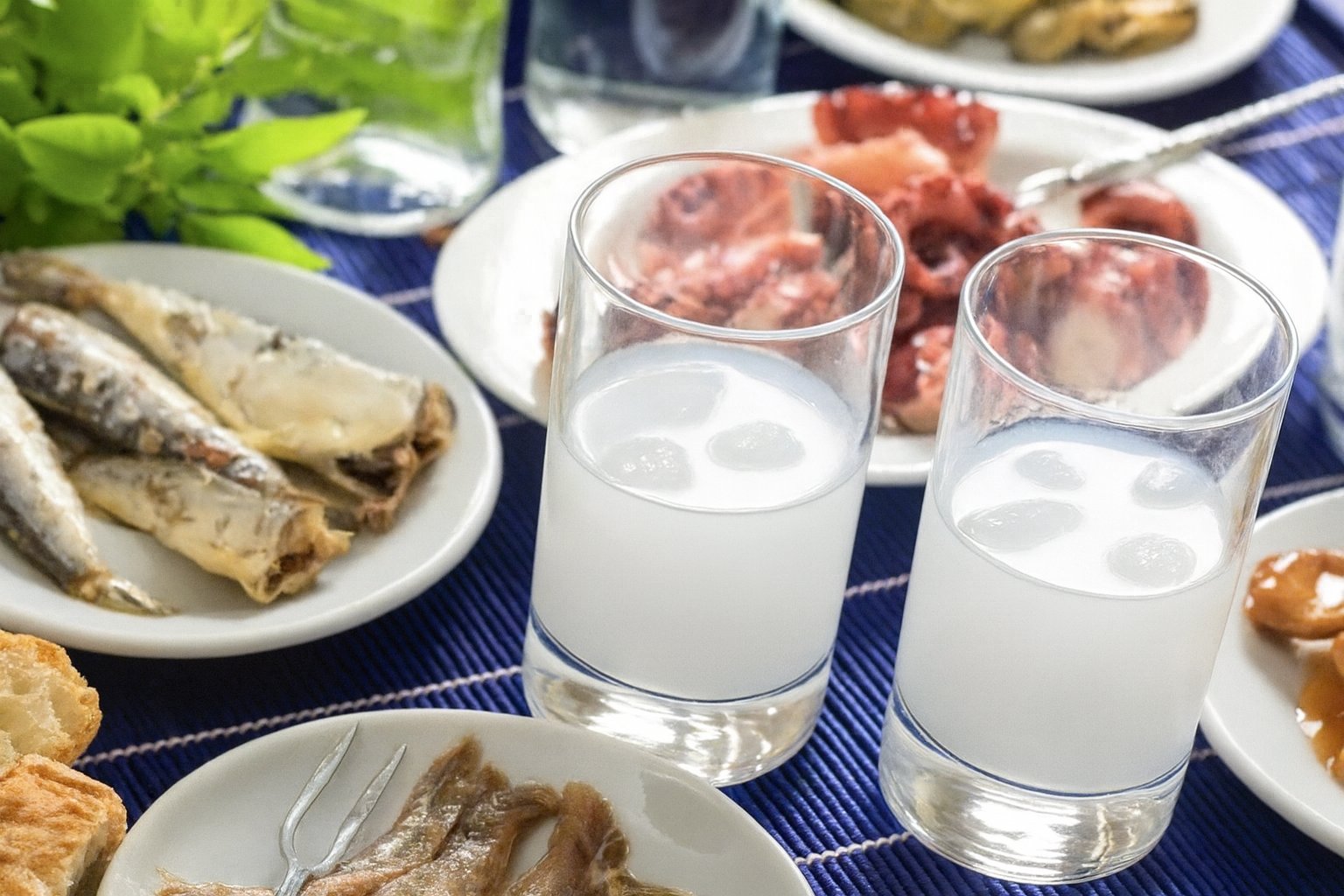
Some people prefer to drink ouzo neat, while others dilute it with cold water or pour it over ice. Adding water triggers a fascinating chemical reaction that turns the clear liquid into a cloudy, milky white. This transformation not only makes it visually striking but also softens the flavor, giving it a cooler, more refreshing profile.
Ouzo is best enjoyed in an ouzeri (gr. ουζερί) - small taverns dedicated to serving this iconic drink, always accompanied by meze (gr. μεζέ). A spread of salty, tangy and savory small plates - from grilled octopus to feta with olive oil - brings out the herbaceous, aromatic depth of the spirit. Together they form an irresistible Mediterranean pairing.

Retsina
Retsina (gr. ρετσίνα) is a traditional Greek wine instantly recognizable thanks to its characteristic pine-resin note. This unique flavor is created by adding small amounts of pine resin to the grape must during fermentation. Far from being an artificial enhancement, this practice has ancient origins.
In antiquity, before the invention of modern sealing methods, wine stored in clay amphorae was protected with pine resin to prevent oxidation. Over time, winemakers - and drinkers - developed a taste for the resin’s distinct aroma.
Today, retsina is produced mainly in Attica and on the island of Euboea, using indigenous grape varieties such as Savatiano and Roditis. Its Protected Designation of Origin (PDO) status ensures that it is made according to strict traditional standards.
While retsina once carried a reputation for being rustic, modern versions are clean, crisp and pleasantly aromatic. Expect lively citrus and herbal notes supported by a subtle pine essence that pairs beautifully with Greek dishes, especially seafood - grilled sardines, fried squid or lemony fish soups.
Tsipouro - Raki - Tsikoudia
Tsipouro (gr. τσίπουρο) is one of Greece’s most cherished traditional spirits - robust, aromatic and deeply connected to rural and monastic heritage. It is made primarily from grape pomace: the skins, seeds and pulp left after pressing grapes for wine. These remnants are fermented and distilled, often with the addition of herbs or spices depending on the region, which can lend the spirit a lightly perfumed or peppery finish.
The origins of tsipouro trace back to the monasteries of Mount Athos. On Crete, a very similar drink is produced - tsikoudia (gr. τσικουδιά), also widely called raki (gr. ρακή). The main difference lies in production: tsikoudia is traditionally distilled only once, giving it a purer but often more rustic profile.
With an alcohol content typically between 36% and 45%, tsipouro is often compared to Italian grappa or Middle Eastern arak. It is powerful, but when well-crafted, surprisingly smooth. Taverns specializing in the drink are called tsipouradika (gr. τσιπουράδικο), where glasses of tsipouro are served with generous spreads of meze - smoked fish, grilled vegetables, olives, cheeses and more.
Expect flavors that vary from fruity and floral to earthy, spicy and even slightly smoky depending on the producer.
Metaxa
Metaxa (gr. Μεταξά) - sometimes casually referred to as “Greek cognac” - is in fact its own unique category of spirit: a refined blend of brandy, aromatic wine and a mixture of herbs and rose petals. Rich, smooth and slightly sweet, Metaxa is beloved both as a sipping drink and as a base for sophisticated cocktails.
The process begins with the distillation of white grapes, producing a strong, clean spirit. This is then blended with Muscat wine from the Aegean islands, which contributes floral sweetness and a delicate honeyed aroma. Additional layers of flavor come from herbs and rose petals, and the blend matures in oak barrels, deepening its amber color and warming complexity.
Metaxa is available in several aged expressions, marked by stars that indicate the minimum years of maturation. Younger versions are floral and lively; older ones develop notes of vanilla, dried fruit, caramel and toasted wood.
Mavrodafni
Mavrodafni (gr. Μαυροδάφνη) is both the name of a grape and a luscious fortified red wine produced from it, originally from the region of Achaia. Intensely sweet and aromatic, Mavrodafni offers a dessert-like richness balanced by a velvety texture.
Production begins with fermenting the grapes in large vats exposed to sunlight. When the fermentation reaches the desired stage, it is halted by adding a distilled spirit made from previous harvests. The fortified wine is then aged in underground cellars, slowly moving from one barrel to another to develop complexity.
Mavrodafni’s deep, dark color borders on opaque purple-brown. Expect aromas of caramel, chocolate, coffee, raisins and dried plums. It is excellent with dark chocolate, pastries, and aged cheeses - or enjoyed slowly on its own.
Vinsanto (Santorini)
Vinsanto, the famous dessert wine from the dramatic volcanic island of Santorini, is one of Greece’s true vinicultural gems. Made from sun-dried grapes of the Assyrtiko, Aidani and Athiri varieties, it has a naturally concentrated sweetness and a striking amber-to-copper hue.
The flavor is layered and expressive: sun-drenched apricots, cherries, raisins, figs and hints of honeyed citrus, all wrapped in a subtle interplay of sweetness and gentle tannic bitterness. Younger Vinsanto wines are golden-orange and fruit-forward, while older bottles develop deep mahogany tones with complex aromas of coffee, molasses, incense and dried fruit.
Santorini’s terroir - volcanic soil, harsh winds, minimal rainfall and morning sea mists — gives these wines a character found nowhere else. Vinsanto pairs beautifully with caramel-based desserts, fig cakes, nutty pastries or powerful salty cheeses like Roquefort.
Moschofilero
Moschofilero (gr. Μοσχοφίλερο) is both a grape variety and an aromatic white wine hailing from the central Peloponnese. It is celebrated for its vibrant, refreshing character and perfumed bouquet - the name itself hints at fragrance, as “moscho” in Greek refers to aroma.
Although the grape skins range from rose to grey in color, the wines produced are predominantly white, often crisp and dry. Expect flavors of peach, sweet lemon and delicate floral notes. With age, Moschofilero develops hints of dried fruit, apricot and subtle spice.
Its lively acidity and bright aromatics make it a wonderful companion to Greek salads, seafood, grilled vegetables and light Mediterranean dishes.

Agiorgitiko
Agiorgitiko (gr. Αγιωργίτικο) is one of Greece’s most noble red grape varieties, alongside Xinomavro. Primarily grown in the Nemea region - often referred to as “the Little Burgundy of Greece” - it has enjoyed PDO status since 1971.
Rooted deeply in local mythology, Agiorgitiko has long been associated with ancient kings, warriors and legends. Stories tell of the wine enjoyed by Agamemnon in Mycenae and of Heracles shedding his blood in Nemea during his battle with the lion - giving rise to the poetic nickname “the blood of Heracles.”
Agiorgitiko wines range from soft and fruity to deep, structured and spicy. Typical notes include ripe red berries, plum, gentle spice and velvety tannins.
Xinomavro
Xinomavro (gr. Ξινόμαυρο), native to northern Greece - especially around Naoussa - is a grape with personality: bold, complex and famously aromatic. Vineyards in the region suffered greatly from phylloxera in the early 20th century, and large-scale cultivation only recovered in the 1960s, largely thanks to the work of Yiannis Boutaris. In 1972, Naoussa was granted PDO status, cementing Xinomavro as one of Greece’s flagship wines.
The wine can vary in color from medium ruby to deep brick red. Its signature aromas are intriguingly savory: dried tomatoes, tomato paste, black olives or olive tapenade, accompanied by red berries like strawberry and cranberry. Herbal notes (sage, rosemary, eucalyptus) and earthy tones (mushrooms, soil) often appear as well.
Xinomavro is used to make not only red wines, but also rosés, blanc de noir whites and even sparkling wines.
Greek Beer
Although Greece isn’t traditionally known as a beer country, the last decade has seen a remarkable rise in both mainstream breweries and craft beer culture. Greek beers often blend international techniques with local character, and many have earned recognition abroad.
Mythos
One of Greece’s most iconic lagers, Mythos is refreshing, light and smooth, perfect for hot summer days by the Aegean Sea.
Fix Hellas
With origins dating back to the 19th century, Fix Hellas made a successful comeback after years off the market. It has a slightly more pronounced bitterness and fuller body than Mythos.
Alfa
A light, accessible lager with gentle hop notes and low bitterness, Alfa is a favorite everyday beer among locals.
Greek alcoholic drinks do far more than satisfy the palate - they carry stories of history, tradition and the sun-soaked landscapes that shape them. From the anise-kissed cloudiness of ouzo to the volcanic sweetness of Vinsanto or the aromatic elegance of Moschofilero, Greece offers a remarkable variety of flavors for every taste.
What about you - which Greek drink is your favorite?
The herbal punch of ouzo, a glass of local wine, or perhaps the smooth, fragrant charm of Metaxa?
Let us know in the comments!